You’re tired of holding it all together while feeling like you’re quietly disappearing inside.
You've carried the responsibilities, the roles, the strength, such as raising children, building a career, keeping life running. And from the outside, it looks like you've done everything right. But there's an ache underneath it all.
A sense that something essential has gone quiet, and you can't quite name when it stopped speaking.
You had hope, for yourself, for the people you love, for the life you were building. But somewhere along the way, that hope grew quiet too, and you're not entirely sure when it happened, or how to get it back.
You look at the world around you: the speed of change, the loss of things that once felt solid and beautiful and orderly. And you feel a grief you don't have tidy words for. Not just for what's happening out there, but for the woman you sense you were always meant to become, and haven't quite met yet.
Some nights, the same questions circle back:
“Why do I feel so spiritually empty?
Why does having "so much" still feel like it's missing the one thing that actually matters?”
There are times when you may find yourself wondering the following:
“Is this longing for something deeper, for meaning, for a life that feels sacred instead of just busy, just nostalgia? Or is it trying to tell me something true?”
You've done the therapy, the journaling, the self-help books, the pushing forward. Maybe you regularly attend church. Some of it helped. None of it touched the real ache like the quiet sense that you've become a stranger in your own life, disconnected from something you can't quite reach any more.
You don't have all the words for it yet.
You only know that something in you is asking to name the nameless ache, and that naming it is the beginning of change.

You are not trapped in this hurt.
You are wrapped in a chrysalis, and the pressure you feel is the shape of your wings pressing outward.
You are not alone in feeling this way
What you are carrying is not a failing, and it is not proof that something is wrong with you. It is the quiet grief of a Western woman who still remembers, even if only faintly, that life can hold more beauty, more order, more depth, and more belonging than the pace of modern life usually allows.
That ache is not weakness. It is a sign that something in you is still awake, still reaching, still asking to come home to a familiar memory it can sense, but cannot quite call back yet.
This longing for deeper roots, for meaning, for a life that feels sacred instead of merely busy, is not nostalgia. It is worth listening to. It is a call.
You do not have to have it all figured out to be here.
You do not need the perfect words, a clear five-year plan, or proof that you deserve this kind of attention. You are allowed to simply be a woman who is tired, who is grieving something she cannot quite name, and who is ready, even quietly, even uncertainly, to remember who she really is.
There is no urgency here
And there is no shame in how long it has taken you to arrive at this page.

HI THERE!
I am Ruth,
I am Ruth,
The founder of the Western Woman' Chrysalis.
How it all started...
For over twenty years, I've walked closely with women's inner lives, teaching Astrotheology and the Holy Science, with a focus on Western thought and tradition, alongside Jungian psychology and the ancient cosmologies and sacred symbolism woven through it.
I know the ache many of you carry, because I've lived my own version of it: unravelling, grief, disorientation, the sense of being a stranger in a place I once called home. I know what it costs to sit with that instead of numbing it or rushing past it.
I call this work the Western Woman's Chrysalis, because that's exactly what it is: a sacred space for dissolving what no longer serves you, and slowly, patiently, becoming more aligned with your feminine radiance, more connected to a memory that keeps knocking at the back of your mind, and more fully yourself.
Here, we draw on the cathedrals, the philosophy, the Christian mysticism, and the myths and legends of Greece and Rome, not as history to admire from a distance, but as a living inheritance you're invited to reconnect with, in a way that feels personal rather than performative.
I do not offer you a technique. I offer you a return, through the WEST Way, three keys, not scattered techniques: Greco-Roman myth, Christian mysticism, and Jungian psychology, held together, because they were never truly apart. I won't pretend I have all the answers.
What I can offer you is companionship through the amnesia, someone who has walked this path herself and now helps other women remember what was always theirs, step by step, back home to themselves.
The Origin Story of the Western Woman’s Chrysalis
The Before
My great-grandparents came from Spain and Portugal, and that ancestral pull shaped my life. For more than twenty years I taught Astrotheology, Christian Mysticism and Symbolism across Europe, first in the UK, then Spain, and finally Portugal, the place that felt like home the moment I arrived. I raised my daughter there, living simply among its warmth, strong family values and deep cultural rhythm.
I grew up in a Western Christian home where work, domestic life and dignity were central to our way of life. That sense of rooted belonging stayed with me until the natural cycles of life and the rapid changes sweeping the West began to intensify.
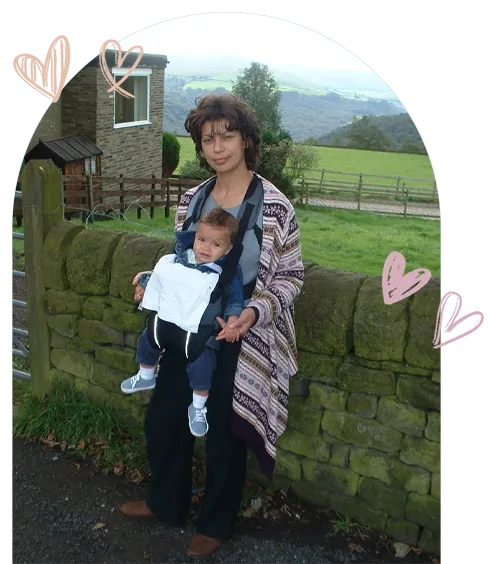
Hebden Bridge, Calder Valley, West Yorkshire, United Kingdom, 2006, with my eight-month-old daughter.
The Moment Things Changed
I didn't have a name for what I was feeling. I only knew that something in me had gone quiet, a low, persistent ache with no clear address, not for a house, not even for a country exactly, but for a way of being that had once felt native to me.
We left Portugal for the UK in 2022, and returned in 2024, after a year and a half away. Coming home to Portugal, I understood I wasn't imagining it. Cultural decline, at a pace that felt startling, had become obvious all around us, not just in the UK but also in Portugal. The small Portuguese town that had once welcomed us with open arms, generous people, living traditions, real community, had shifted so quickly that both my daughter and I felt heartbroken.
I didn't yet know to call what I was feeling amnesia. I only knew that something I had once known by heart, I could no longer fully find.
Then came the question I will never forget. My daughter asked, ❝Mom, will Portugal and the rest of Europe be Europe again?❞
Before answering her, I paused for a few minutes. My mind raced. Prompted by what I had been seeing across Europe, for days I had been quietly trying to make sense of everything, drawing on what I had learned from my studies, from what I had taught, from my own feelings and intuition. In that very moment, I recalled biblical and other ancient mystical visions about the time we are living in.
This is the answer I gave her: ❝Yes, Europe, the entire Western world, is going to change for the better.❞
I told her that what Europe and the rest of the Western world was experiencing is part of a cycle, and that a powerful lesson lies beneath it all, that we are being asked to reconnect with what holds real value: our Western culture, its core values like the family unit, and the ancient traditions that originated from the world of Christianity.
That question, and the answer it demanded of me, was the moment my own nameless ache finally found its name.
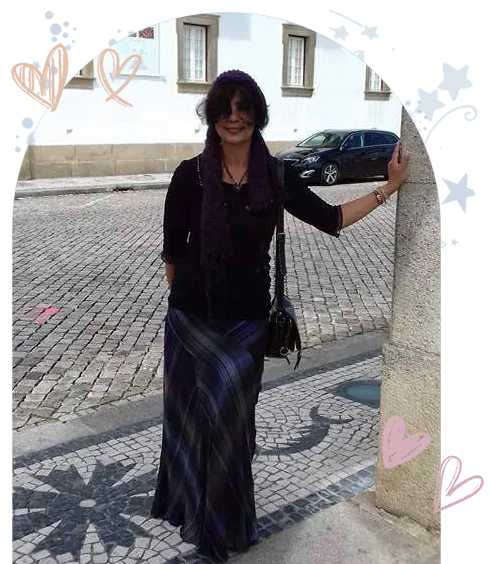
During a visit to Castelo Branco city centre, Portugal, 2017.
The Decision
The answer I gave my daughter raised a powerful dilemma in me. It's undeniable the world is rapidly changing, faster than many of us could have predicted. Now what? I asked myself.
I knew the answer was to share what I understood about those changes with the Western world, since the West, for spiritual reasons, is playing a huge part in this incredible transition we find ourselves in. In response, I began a project called Back to Basics, focused on Christian tradition and cultural continuity, but it never fully found its shape.
Looking inward, I realised the real work had to begin with the Western woman herself, not with awareness campaigns, but with her own remembrance. She carries the feminine wisdom that holds families, communities and civilisations together. If she is disconnected from her own roots, no external solution will restore what is being lost.
Out of that realisation the Western Woman's Chrysalis was born, a sacred space for Western women to name their own version of this ache, release what no longer serves them, and remember who they are, rooted in the ancient Christian and classical foundations of the West.
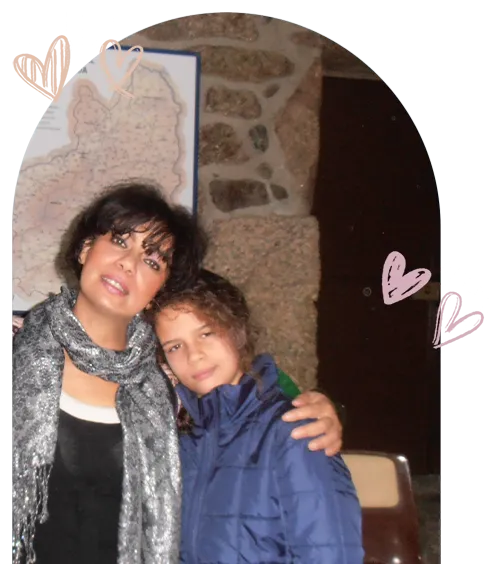
Vale de Prazeres, Castelo Branco, Portugal, 2015,
with my beautiful daughter.
Why It Matters
This matters because of how I was raised, and how I've tried to raise my daughter. I grew up poor yet proud in a Christian home in the 1960s. My mother kept a clean house, put food on the table and told us stories of families who stayed together through hardship. I see that same spirit in the Portuguese neighbours who still bring potatoes from their garden and check on us when we have not been seen for a few days.
Portugal once reflected the home I knew, and watching that culture slowly erode taught me something I now believe completely: amnesia is not forgetting. It is forgetting that you've forgotten. That is what I felt, standing in that changed town. Not loss exactly. A kind of quiet, cultural amnesia, mine and, I believe, ours.
We are facing something large enough to unmake us, yet we remain capable of remembering who we are and choosing to carry our heritage forward with grace and strength. That is the whole premise of the Western Woman's Chrysalis, and it is also, simply, my own story: not fixing a flaw, but naming an ache clearly enough that healing finally becomes possible.
I do not have every answer. But this I know: the West is the cradle of our civilisation, and it can remain so if we reclaim, with renewed pride and feminine wisdom, the roots that first gave it life.
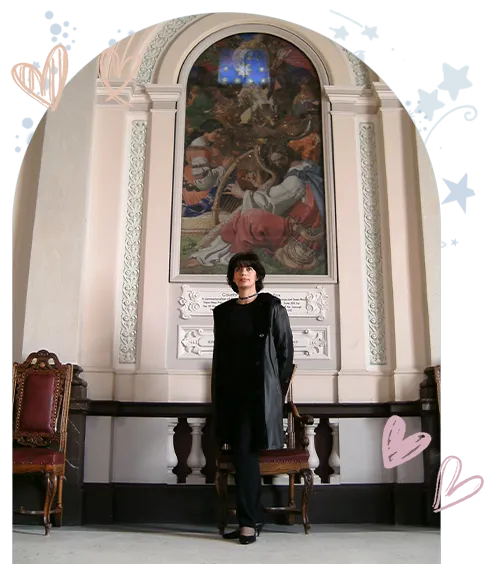
Halifax, West Yorkshire, UK. 2006
The Origin Story of the Western Woman’s Chrysalis
Hebden Bridge, Calder Valley, West Yorkshire, United Kingdom, 2006,
with my eight-month-old daughter.
The Before
My great-grandparents came from Spain and Portugal, and that ancestral pull shaped my life. For more than twenty years I taught Astrotheology, Christian Mysticism and Symbolism across Europe, first in the UK, then Spain, and finally Portugal, the place that felt like home the moment I arrived. I raised my daughter there, living simply among its warmth, strong family values and deep cultural rhythm.
I grew up in a Western Christian home where work, domestic life and dignity were central to our way of life. That sense of rooted belonging stayed with me until the natural cycles of life and the rapid changes sweeping the West began to intensify.
The Moment Things Changed
I didn't have a name for what I was feeling. I only knew that something in me had gone quiet, a low, persistent ache with no clear address, not for a house, not even for a country exactly, but for a way of being that had once felt native to me.
We left Portugal for the UK in 2022, and returned in 2024, after a year and a half away. Coming home to Portugal, I understood I wasn't imagining it. Cultural decline, at a pace that felt startling, had become obvious all around us, not just in the UK but also in Portugal.
The small Portuguese town that had once welcomed us with open arms, generous people, living traditions, real community, had shifted so quickly that both my daughter and I felt heartbroken. I didn't yet know to call what I was feeling amnesia. I only knew that something I had once known by heart, I could no longer fully find.
During a visit to Castelo Branco city centre, Portugal, 2017.
Vale de Prazeres, Castelo Branco, Portugal, 2015,
with my beautiful daughter.
Then came the question I will never forget.
My daughter asked, “Mom, will Portugal and the rest of Europe be Europe again?”
Before answering her, I paused for a few minutes. My mind raced. Prompted by what I had been seeing across Europe, for days I had been quietly trying to make sense of everything, drawing on what I had learned from my studies, from what I had taught, from my own feelings and intuition.
In that very moment, I recalled biblical and other ancient mystical visions about the time we are living in.
This is the answer I gave her: “Yes, Europe, the entire Western world, is going to change for the better.”
I told her that what Europe and the rest of the Western world was experiencing is part of a cycle, and that a powerful lesson lies beneath it all, that we are being asked to reconnect with what holds real value: our Western culture, its core values like the family unit, and the ancient traditions that originated from the world of Christianity.
That question, and the answer it demanded of me, was the moment my own nameless ache finally found its name.
The Decision
The answer I gave my daughter raised a powerful dilemma in me. It's undeniable the world is rapidly changing, faster than many of us could have predicted. Now what? I asked myself.
I knew the answer was to share what I understood about those changes with the Western world, since the West, for spiritual reasons, is playing a huge part in this incredible transition we find ourselves in.
In response, I began a project called Back to Basics, focused on Christian tradition and cultural continuity, but it never fully found its shape.
Looking inward, I realised the real work had to begin with the Western woman herself, not with awareness campaigns, but with her own remembrance. She carries the feminine wisdom that holds families, communities and civilisations together. If she is disconnected from her own roots, no external solution will restore what is being lost.
Out of that realisation the Western Woman's Chrysalis was born, a sacred space for Western women to name their own version of this ache, release what no longer serves them, and remember who they are, rooted in the ancient Christian and classical foundations of the West.
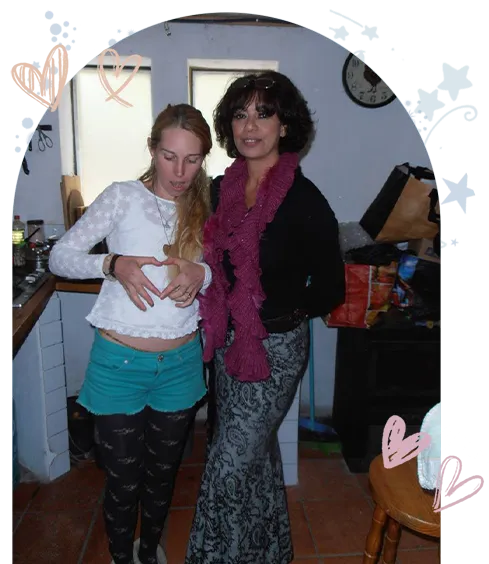
With am English friend in her house in the Castelo Branco area, Portugal, 2017
Halifax, West Yorkshire, UK. 2006
Why It Matters
This matters because of how I was raised, and how I've tried to raise my daughter. I grew up poor yet proud in a Christian home in the 1960s. My mother kept a clean house, put food on the table and told us stories of families who stayed together through hardship. I see that same spirit in the Portuguese neighbours who still bring potatoes from their garden and check on us when we have not been seen for a few days.
Portugal once reflected the home I knew, and watching that culture slowly erode taught me something I now believe completely: amnesia is not forgetting. It is forgetting that you've forgotten. That is what I felt, standing in that changed town. Not loss exactly. A kind of quiet, cultural amnesia, mine and, I believe, ours.
We are facing something large enough to unmake us, yet we remain capable of remembering who we are and choosing to carry our heritage forward with grace and strength. That is the whole premise of the Western Woman's Chrysalis, and it is also, simply, my own story: not fixing a flaw, but naming an ache clearly enough that healing finally becomes possible.
I do not have every answer. But this I know: the West is the cradle of our civilisation, and it can remain so if we reclaim, with renewed pride and feminine wisdom, the roots that first gave it life.
The Official Bio
Ruth Rosa Ramos de Smith (known professionally as Ruth Rosa) is the founder of the Western Woman's Chrysalis, a body of work dedicated to helping Western women reconnect with the philosophical, spiritual, and cultural traditions of the West as a path through midlife transition, uncertainty, and spiritual disconnection.
For over twenty years, Ruth has taught Astrotheology, Christian Mysticism, and Symbolism, with a focus on Western thought, sacred symbolism, and the inner architecture of the soul.
She is the founder of the School of the Holy Science, an online platform that taught the Holy Science through webinars, radio, and a range of other resources for nearly twenty years.
Her approach weaves together the contemplative depth of Christian mysticism, the psychological insight of Carl Jung, and the enduring philosophy and mythology of ancient Greece, Rome, and the Celts into a coherent framework she calls the WEST Way.
She deliberately avoids both modern New Age approaches and rigid religious dogma, instead offering a grounded, reverent path that honours the deep spiritual and cultural heritage of the West while remaining fully compatible with a thinking, discerning mind.
Through the Western Woman's Chrysalis, Ruth guides women using writing, teaching, sacred symbolism, and one-on-one work. She helps them move from a quiet, often unnamed sense of disconnection toward a grounded, radiant sense of self rooted in their Western tradition and heritage.
She is the author of The Nameless Ache: Why So Many Western Women Feel Spiritually Adrift, and the Homecoming Waiting on the Other Side, a free guide exploring the roots of this disconnection and the path back to wholeness. Her signature offering, Coming Home to Yourself: Remembrance, guides women through the same journey in far greater depth.
Ruth's own path has shaped her work as much as her studies. Her family roots in Spain and Portugal, and her long relationship with Iberian culture, deeply inform her understanding of heritage, belonging, and what it means to feel truly at home in oneself.
She currently lives in Portugal, a country she passionately loves.
What I Stand For
✨The sacred remembrance of Western heritage and the beauty, order, and wisdom it carries.
✨The feminine soul of the West, strong, graceful, devoted to family, and essential to our civilisation's renewal.
✨The sacred process of transformation, dissolution and rebirth, grief and radiance, the chrysalis.
✨Deep belonging to our ancestral culture that derived from Christian values and the classical traditions that shaped the West.
✨A life of meaning, beauty, and quiet dignity rather than constant busyness and distraction.
What I Stand Against
✨The cultural amnesia that makes Western women feel ashamed of their own heritage.
✨Shallow self-help that ignores the soul and the deeper call of remembrance.
✨The idea that progress means rejecting our roots or diluting what makes the West unique.
✨The normalisation of spiritual disconnection and the erosion of beauty, order, and family values.
✨Any path that asks women to abandon their lineage instead of reclaiming and honouring it.
A bit more about me...
I was born in the first permanent European settlement in the Americas: the Dominican Republic.
I am a Christian contemplative who has, at times, been given genuine mystical experience.
I'm passionate about Western culture, especially the rhythm of Christian ritual, Christmas, Easter, and the sacred calendar that shapes a year. I adore European folklore too, its old customs, costumes, and living traditions.
I believe a woman's home should reflect who she is, feminine, nurturing, orderly, and elegant, a quiet extension of her own inner grace rather than separate from it.
A few fun little extras...
I was once vegan, and after nearly a year, I deeply regretted it for health reasons. I am now committed to a traditional, whole-foods way of eating, the kind my grandmother would have recognised.
I was diagnosed with ADHD as an adult, a diagnosis that finally explained so much about the struggles I faced with my studies growing up. Through sheer determination, I learned not just to manage it, but to live well with it.
I adore Spanish and Portuguese food, wine, folklore, customs, and traditions, along with the quiet beauty of the English countryside.
I’m an avid organic gardener, and country life is the only way of life for me and my daughter.
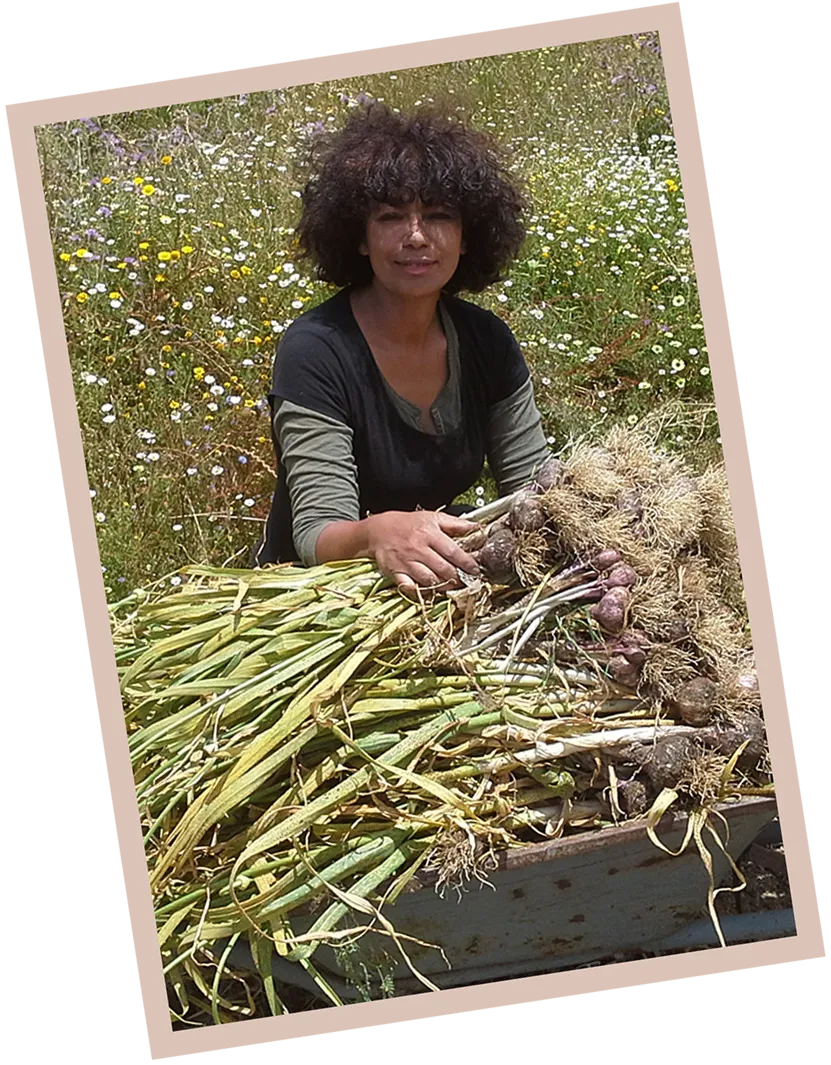
After pulling up my first organic garlic harvest in Castelo Branco, Portugal. 2014
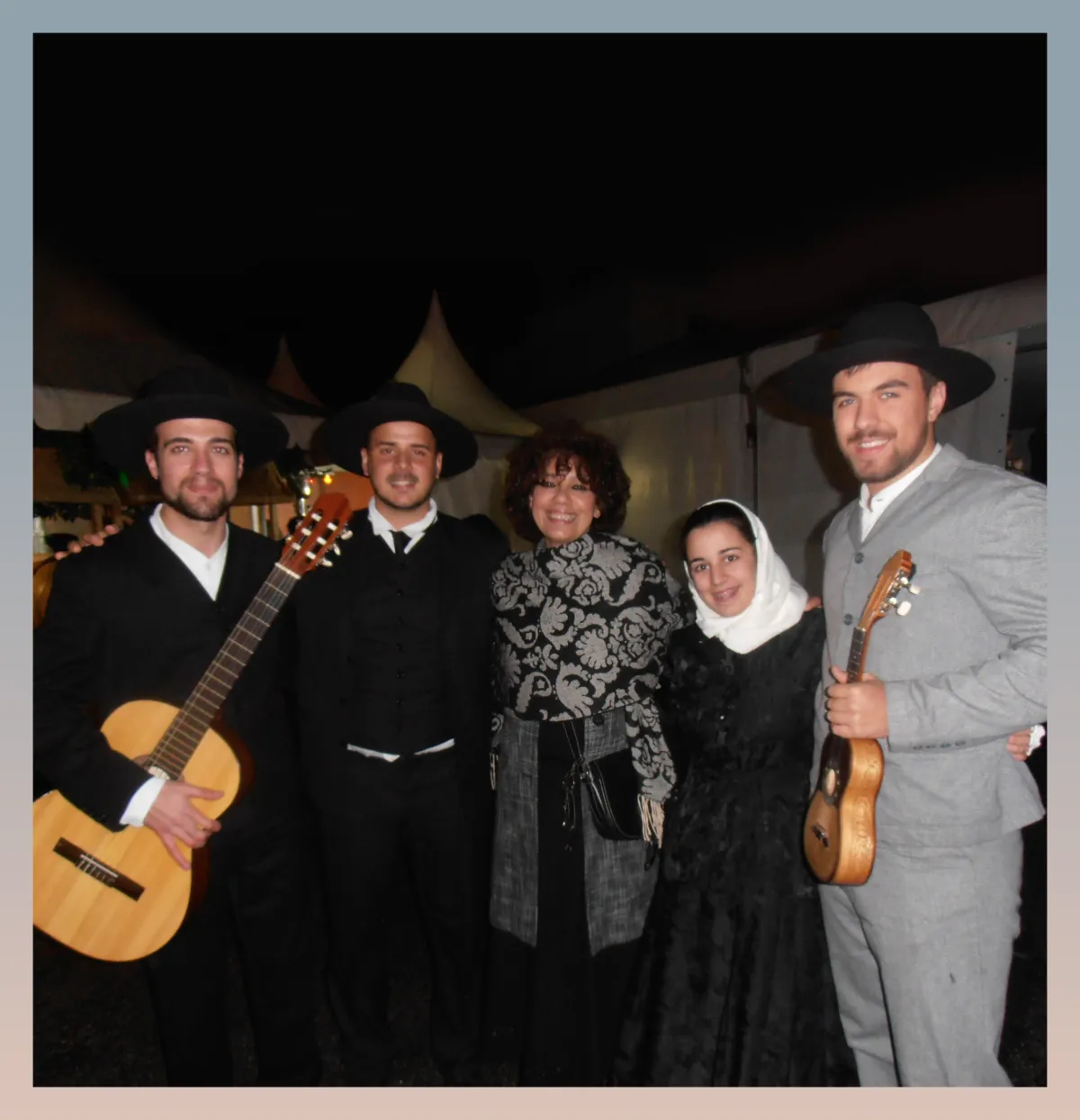
With wonderful members of a local Rancho Folclórico from the Castelo Branco district (Beira Interior), Portugal. These groups preserve the traditional music, dance, and regional costumes of the area, a beautiful expression of living Portuguese heritage.
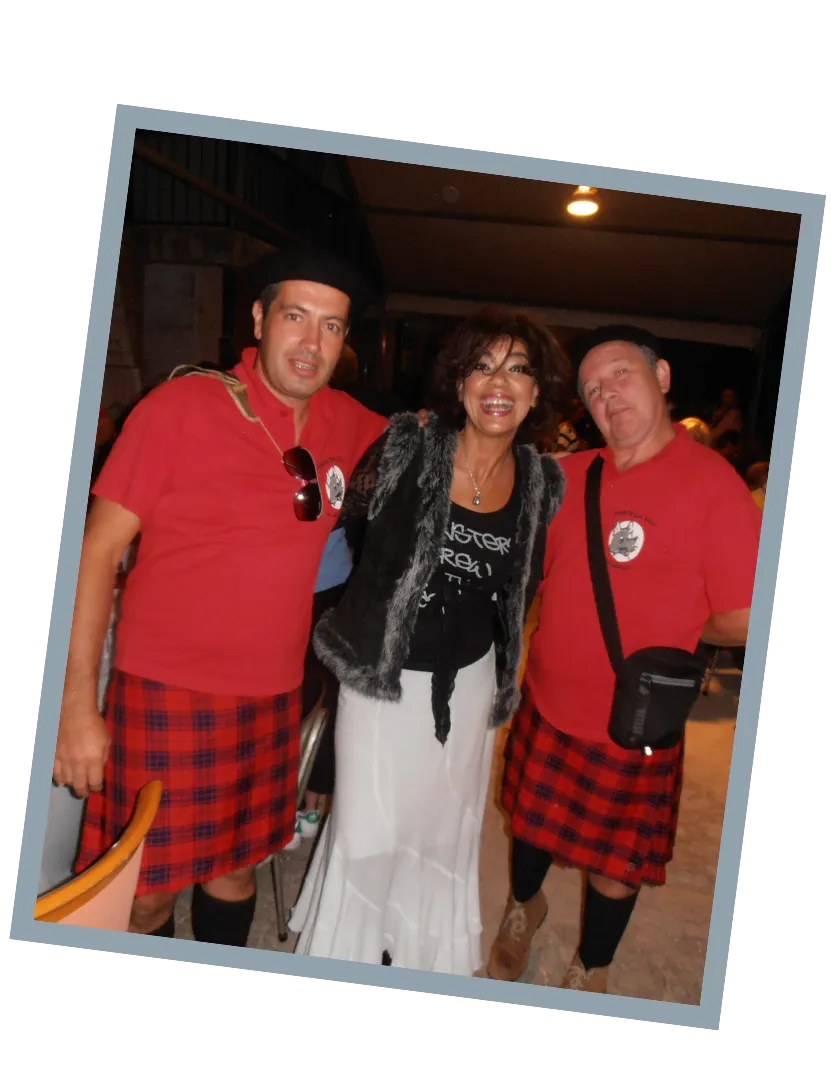
Me, happily in the middle of two wonderful men from the village of Alpedrinha, in Fundão, Portugal. They are proudly wearing their traditional regional folk costume. The distinctive red and black plaid pattern strongly resembles a tartan, reflecting the rich folk heritage of the Beira Interior region.
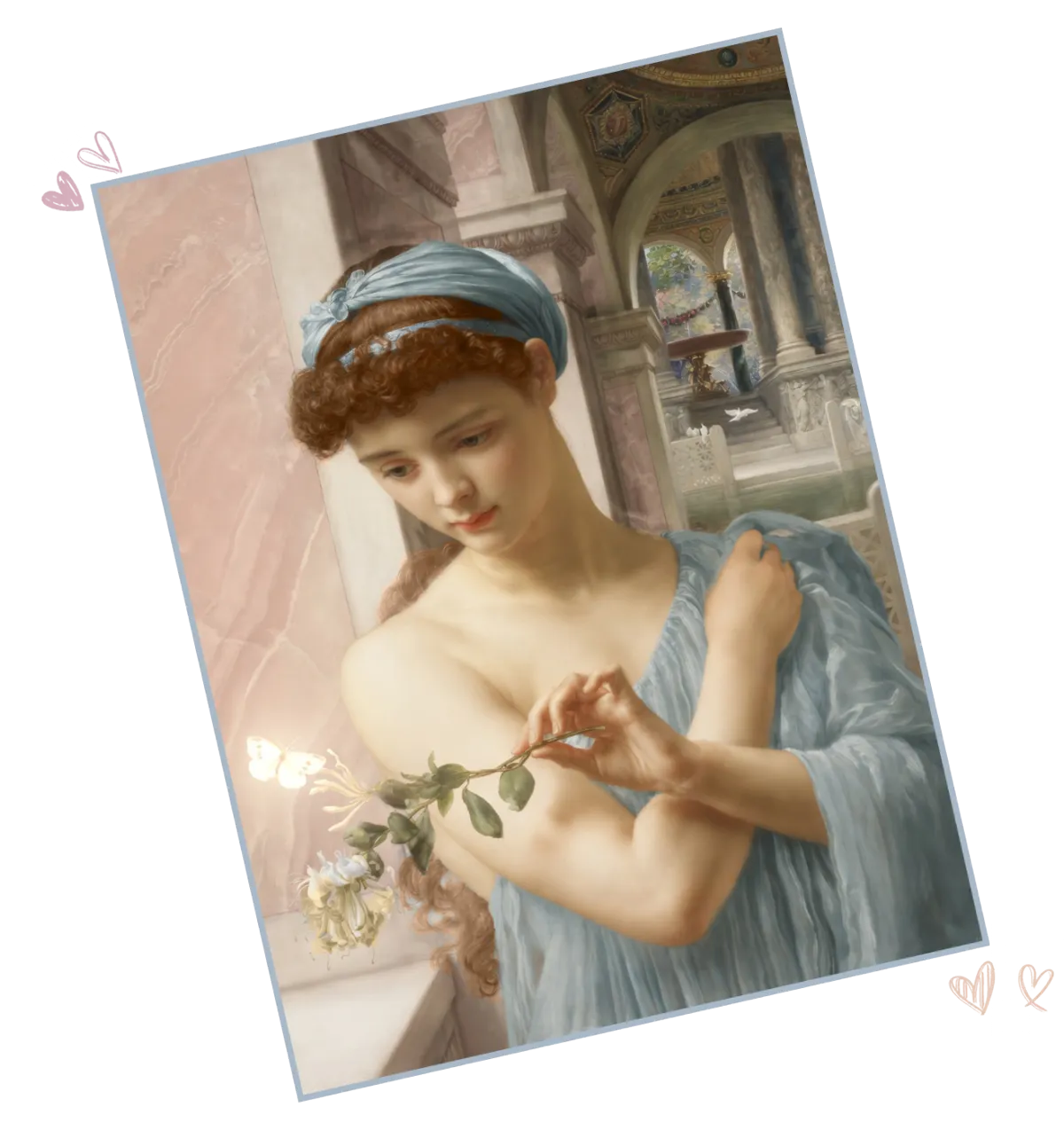
FREE DOWNLOAD
The Nameless Ache
Why So Many Western Women Feel Spiritually Adrift, and the Homecoming Waiting on the Other Side.
You'll finally have a name for the ache you've felt for years, and a real, tested path back to feeling whole.
Many Western women carry a quiet grief they can't quite name, even when life looks fine from the outside. This short book names it, traces it to what's actually been lost, belonging, beauty, a felt connection to Western tradition and the sacred, and offers seven real remedies, drawn from Western myth, philosophy, and Christian mysticism, to help you feel rooted and at home in yourself again.
In midlife and beyond.
LET'S CONNECT
Suspendisse pulvinar, metus vitae finibus interdum, nunc nibh interdum sem, nec tempus ante ante quis nisi.
© Copyright 2026 - Ruth Rosa - Privacy Policy - Terms & Conditions